


Table of Contents
From barnstorming accidents to the FAA in 1958 and the TSA after 9/11, here's how aviation became one of the safest ways to travel, and what that means for ONT.
Ever think about what it would be like to describe your modern life to the average medieval citizen? Pretty crazy contrasts, right? Now, imagine telling someone from 1950 what the average 2020s airport experience looks like.
Depending on your age, the contrasts here might be just as shocking. You check in on your phone, hand over a government-issued ID at a security checkpoint, walk through a body scanner, board a jet guided by a nationwide air traffic control system and arrive at an airport where thousands of rules and systems work invisibly to keep everyone safe.
These systems, of course, weren’t constructed overnight — and sometimes, they had to be shaped by tragedy. The labors of over a century of work gave us the FAA, the TSA and the boundless skies we can all cross without fear.
How was the modern landscape of US aviation safety created? Let’s take a look.

When Heads Turned to the Skies
For much of human history, people considered flight in any heavier-than-air craft physically impossible. But, just a little over a decade after the Wright brothers’ first powered flight changed the world, human beings were already using simple airplanes — constructed largely of fabric and wood — as instruments for new kinds of warfare.
1914 was an explosive year of aeronautic and mechanical experimentation, with World War I ushering in a modern era society was not yet prepared for. During this time, Tony Jannus, an American pilot, completed the inaugural flight of the first commercial plane, the St. Petersburg–Tampa Airboat Line. Across government and civilian life, the airplane was immediately seen for what we know it as today: an instrument to greatly expand the possibilities of the human experience.
But was a nation still wrapping its head around automotive innovation and speed-limits ready to regulate and oversee movement in the clouds?
Related: What Does it Take to Become a Pilot?
Before Anyone Was in Charge
As airplanes became more capable and commercial aviation began to grow (helped by a need for faster mail), the federal government gradually introduced rules for pilot training, aircraft certification and air navigation. Federal regulation began with the Air Commerce Act of 1926, legislation which granted the US Department of Commerce authority over general aviation, safety and licensing. With this act came aircraft inspections, airway path creation and the development of better communications and navigational tools. Creation of the Civil Aeronautics Authority in 1938 allowed for the standardized training and licensing of a new generation of pilots.
Still, the rapid growth of aviation created a problem: The skies were becoming increasingly busy, and navigating them, increasingly complicated. Multiple agencies handled different pieces of the system while the technology rapidly evolved, leaving gaps in oversight, conflicts and other safety issues. By the middle of the 20th century, it became clear that the United States needed a more unified approach to managing its crowded airspace.
Unfortunately, it took a tragedy to force our hands.

The Collision That Changed Everything
On June 30, 1956, two commercial airliners collided over the Grand Canyon.
A TWA Lockheed Super Constellation and a United Airlines Douglas DC-7 were flying through the same swath of airspace when they collided. All 128 people aboard the two aircraft were killed. At the time, it was the deadliest aviation disaster in U.S. history.
The tragedy exposed major limitations in the country's existing air traffic control system. Commercial aviation was growing quickly, but the system for managing aircraft in the nation's skies had not kept pace. While air traffic control existed when the accident took place, the collision occurred in “uncontrolled airspace” where it was solely the pilots’ responsibility to know the locations of other planes and maintain separation. But how can any normal aircrew be expected to know, at all times, the position of all other objects around their aircraft, especially when cloud layers might be present?
Public trust in air travel, previously strong, took a hit. As near-misses and collisions increased, the American people demanded action. With airspace control split between the military and the Civil Aeronautics Authority, no one group could effectively solve the issue. The nation needed reorganization to appropriately regulate its skies, and on August 23, 1958, President Dwight D. Eisenhower signed the Federal Aviation Act, creating the independent Federal Aviation Agency to oversee civil aviation and the safe, efficient use of national airspace. The agency began operating at the end of 1958.
The FAA Is Born
President Johnson understood that the different, complex transportation industries across the country demanded their own department of oversight to ensure the public good. To this end, the US Department of Transportation began operations on April 1, 1967, and the Federal Aviation Agency, now under its umbrella, was renamed to the Federal Aviation Administration (FAA).
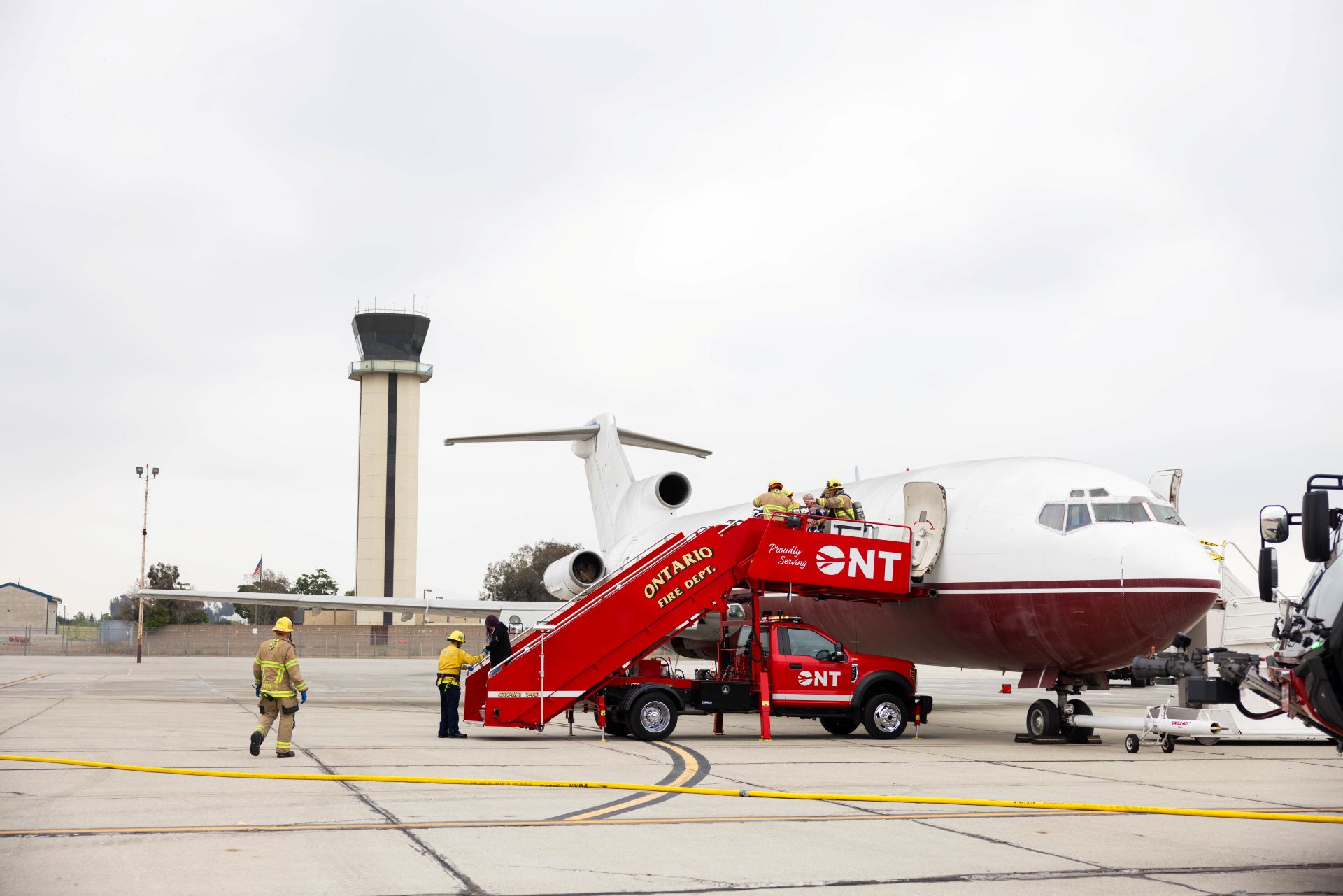
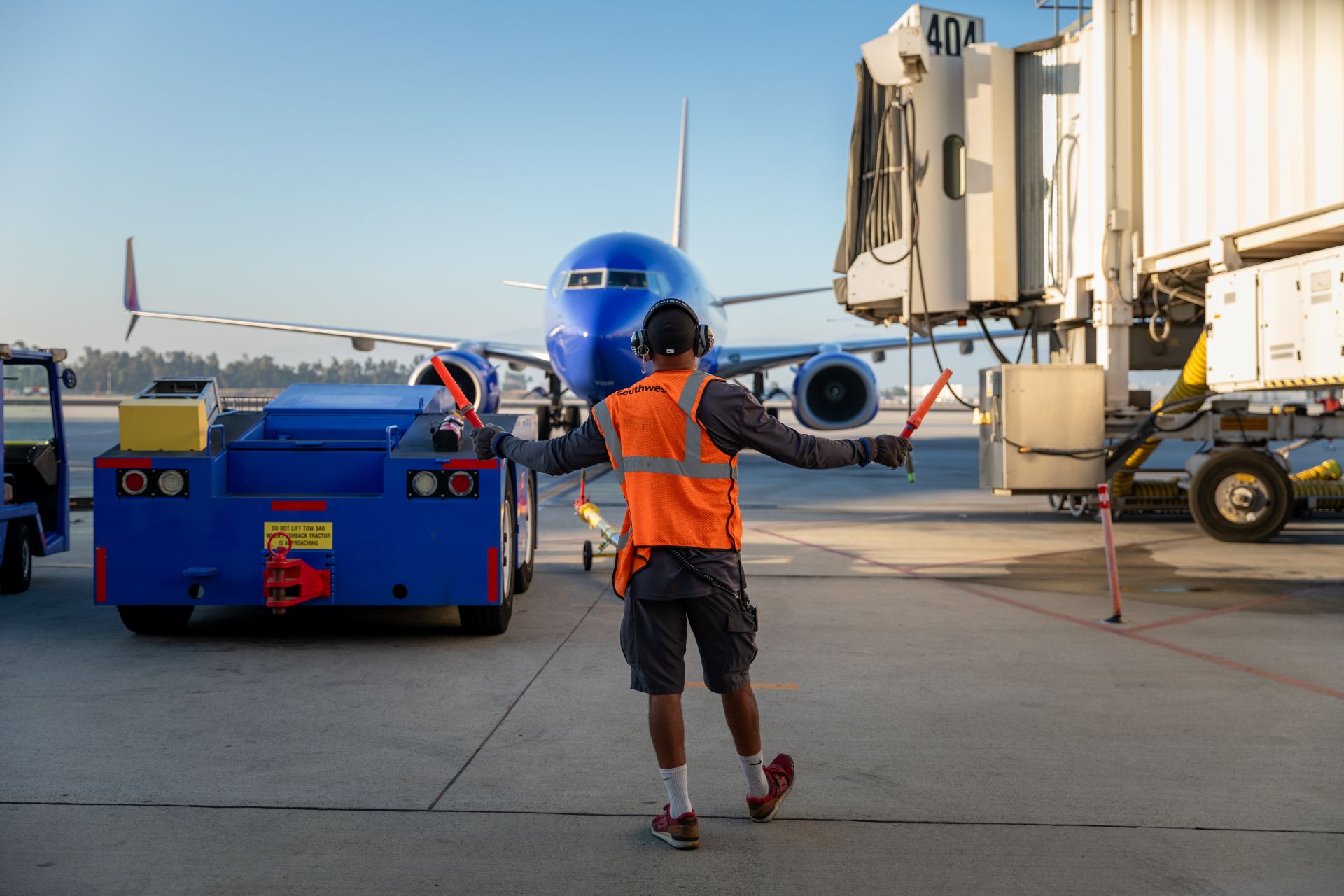
Today, the FAA is the operating system that keeps departures safe and on schedule. It controls nearly all aspects of American air operations, including monitoring aircraft in flight, managing air traffic and runway flow, enforcing aviation-safety rules, performing accident investigations and certifying pilots, mechanics and aircraft. That means when a pilot earns a certificate, an aircraft is cleared for operation or an air traffic controller sequences aircraft for takeoff and landing, the FAA is part of the system behind it.
For passengers, the result is mostly invisible. That's the point.
9/11 and the Creation of the TSA
Before September 11, 2001, airport security in the United States looked vastly different. Prior to this date, airport screening was generally carried out by private contractors hired under airline contracts. Travelers passed through simple metal detectors, friends and family could accompany passengers all the way to their gate and blades shorter than four inches — including box cutters and folding knives — were permitted under FAA rules.
This may seem incredibly naive in hindsight, but prior to the 21st century, most aircraft hijackings were nonviolent incidents that occurred as products of Cuba-United States relations and Cold War tensions. The tragic September 11th terror attacks exposed the potential destructive power of commercial aircraft and the enormous vulnerabilities in the existing security systems.
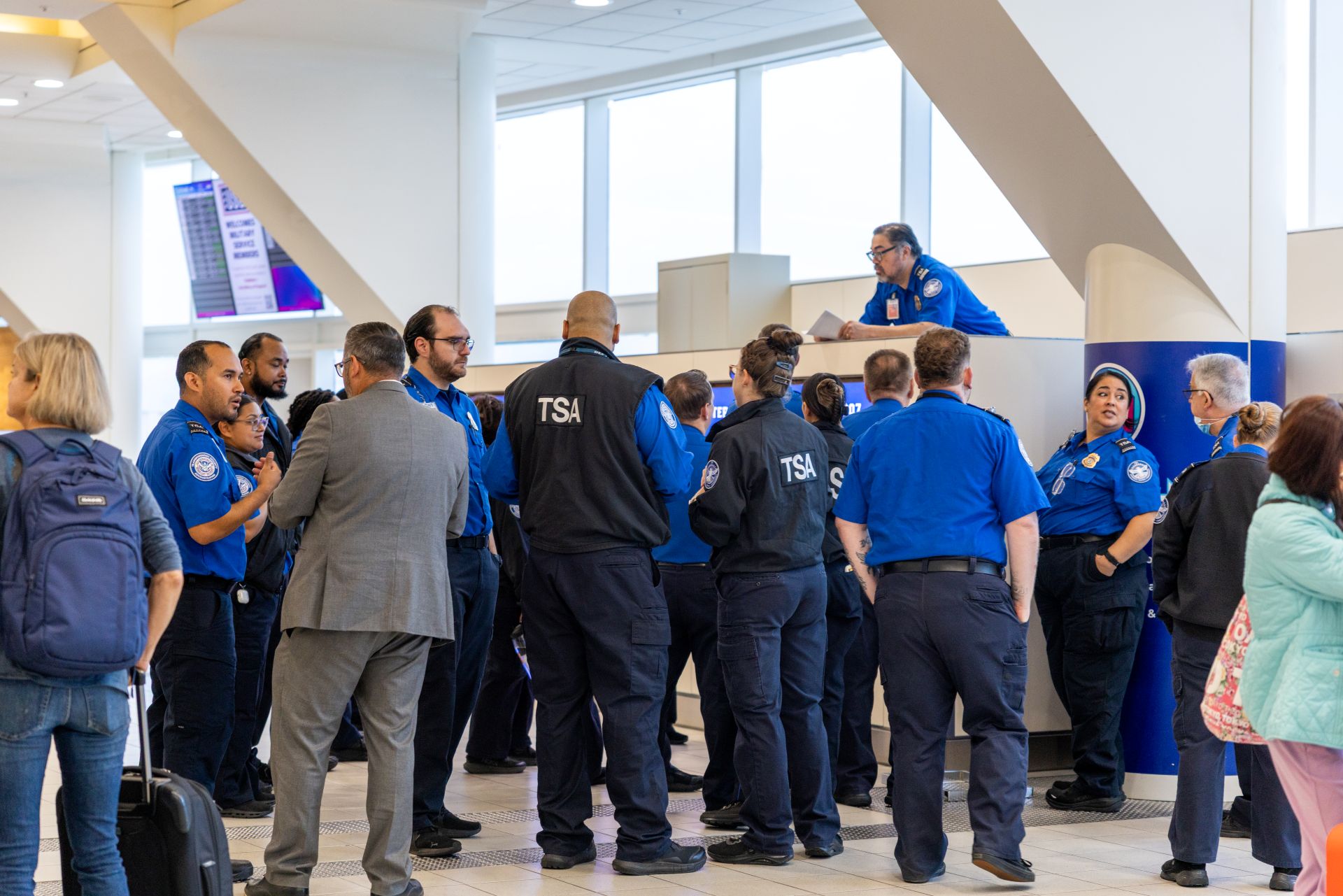
After the September 11th attacks, Congress moved with extraordinary speed. President George W. Bush signed the Aviation and Transportation Security Act on November 19, 2001 — just 69 days after the attacks — creating the TSA and directing the federal government to take over passenger and checked-baggage screening. The government required a screening workforce be in place by November 2002, and TSA claims it completed the federalization of security operations by the end of 2002. By then, the agency had hired, trained and deployed nearly 60,000 people to airports around the nation.
TSA’s rules evolved as they aggressively attempted to identify vulnerabilities, but have now begun to relax (at time of writing, you are no longer required to remove your shoes at most airports). New procedures and faster screening methods are being consistently introduced, and airport security has finally reached a modern balance of thorough and efficient.
Remember When You Could Walk Someone to the Gate? (At ONT, You Still Can)
Before 9/11, saying goodbye at the gate was often as simple as walking your loved one through the airport and waiting with them until boarding. Today, generally only ticketed passengers can pass through standard airport security checkpoints.
ONT's ONT+ Visitor Pass offers a way to bring back the experience of seeing someone off on their big adventure. The program allows approved non-ticketed visitors to go through security and access the terminal so they can meet a traveler, help a family member or say goodbye at the gate.
ONT's Own Chapter in Aviation History
Federal regulation is only part of ONT's story.
For nearly half a century, Ontario International Airport was operated by Los Angeles World Airports. But as the Inland Empire grew, local leaders and community members increasingly pushed for greater local control over air travel. The effort became known as the “Set Ontario Free” campaign. The campaign ultimately led to the creation of the Ontario International Airport Authority and the transfer of the airport from Los Angeles World Airports to local control on November 1, 2016.
Since the transfer, passenger volume has grown significantly, with the airport becoming a significantly important transportation hub for both the Inland Empire and Southern California.
On November 1, 2026, ONT will mark its 10th anniversary under local control.
The Rules Keep Changing Because Aviation Keeps Evolving
The next time you breeze through security at ONT or watch aircraft line up for takeoff, remember that this smooth experience is anything but accidental. Every checkpoint procedure, pilot certification, air traffic instruction and aircraft safety standard represents decades of lessons learned and systems refined.
The FAA helped bring order to an increasingly crowded sky. The TSA transformed airport security after one of the most consequential moments in modern U.S. history. ONT's return to local control created a new chapter in the airport's own story.
And there’s another big takeaway from all this history. All these rules, systems and improvements reflect an industry that’s designed itself around ensuring public safety. In spite of headlines that can make flying feel more dangerous lately, the bigger picture remains reassuring. Commercial aviation continues to be the safest form of public transportation, and the International Air Transport Association (IATA) found that out of 38.7 million flights worldwide in 2025, the global accident rate was only 1.32 per million (including runway failures). Each accident gives aviation professionals another opportunity to learn, investigate what went wrong and improve the systems that keep future flights safe. This shows in the IATA’s long-term data, which reports that the five-year rolling rate for fatal accidents has improved from one in every 3.5 million flights across 2012–2016 to one in every 5.6 million flights across 2021–2025.
And the work continues. The goal, still simple as ever: help people get where they're going safely.
Clear skies await. We’ll see you up there.
Trending Posts

Contact ONT
Have questions for the ONT team? Click the link below for multiple ways to connect with us.